

How To Clean A Noisy Bathroom Fan
Do you lot remember back when your bathroom fan removed the moisture and smells from the room without making the mayhem it does today? If your bathroom fan noise has e'er woken up your family members, you lot need to know how to set up a noisy bathroom fan.
A loud bathroom fan can be caused by many things. In this article, we will go over the main culprits of the exhaust fan noise that is plaguing your life. So we will discuss ix unlike ways to cease bathroom exhaust fan noise.
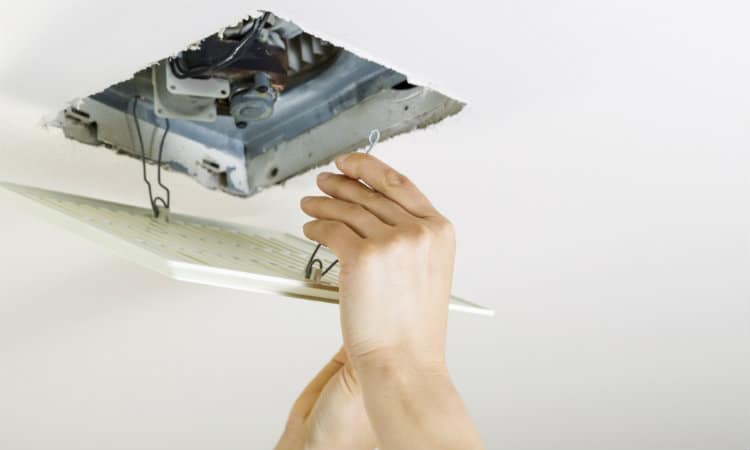
What Bathroom Fan Parts Tin can Make Racket
Fan
The fan blades are the moving part of the fan. Through normal operation, they volition create some audio equally they spin. This volition be louder or quieter depending on the quality of components used in amalgam it.
If the fan is worn out or damaged at all, it may begin to make more dissonance every bit it spins. If your fan is making noise now and it didn't before, you should check for wear or harm on the fan and motor.
Brand sure to go along the fan blades clean and articulate. Dirt buildup over time can cause the fan to become excessively loud.
The sound of air moving that the fan is pushing also creates noise. Someday air is moving, information technology will create some noise, which is unavoidable.
Motor
The motor is what does all the work. It is responsible for turning the fan blades that move the air.
If your fan is older, it may have a louder and less efficient fan motor.
Cheap fans likewise tend to use loud motors that spin fast with minor fans. This creates noticeable excess noise.
If your fan has just recently started making dissonance, it's possible that it could be from the motor going bad. Eventually, the motor will wear out. This tin brand the motor noisy and weak every bit it reaches the end of its lifespan.
Check the motor for whatsoever wear or harm subsequently removing the fan comprehend. If you come across any obvious signs of damage, then information technology may be fourth dimension for a replacement.
After allowing the fan to run for a while, cheque for excessive heat buildup. This could exist a sign that your motor is on its terminal legs.
Duct
Ane of the main sources of noise from your bath exhaust fan is the ductwork information technology hooks into. When your fan removes the air from your bath, information technology has to and so transport it outside of your house through a vent. The air is carried through the ductwork.
No matter what you do, moving air volition e'er create some level of noise. That beingness said, there are several ways to minimize the amount of noise that is made from the air moving through the ducts.
The starting time matter to understand is that college air pressure level means more noise from the air moving. Smaller diameter ducts will create more than air pressure, and therefore, more dissonance.
The quietest bathroom fans on the market are usually built for use with vi" ducts. Still, you lot likely accept 4" or fifty-fifty 3" duct currently residing in your ceiling. It could be a major headache and expense to switch to the larger half dozen" duct.
If your fan is meant to be used with 6" just you take 4" duct currently, you can still hook it upwardly by using a reducer. The trouble is that by doing and then, you volition increase the air pressure and the noise your fan makes. This means you will not achieve the low sone rating that your fan is advertizement.
Another important thing to remember with ductwork is that it should exist as straight equally possible. Hard turns or multiple turns will all increment the air force per unit area and the racket that the fan makes.
If your duct requires taking a turn or several, attempt to lessen the impact by lengthening the turn. For case, instead of using a 90-caste corner, yous can achieve the same angle by using 45-degree connectors instead.
Hangers/Mounting Brackets
A lot of racket that your fan may be making could be caused past poor mounting. This may be the upshot of shoddy initial installation, or it may be from the screws and mounting hardware loosening up over time. Either fashion, the outcome is the aforementioned.
When the fan is loose, the vibration created by the motor and the fan volition not be contained. The entire fan assembly volition exist allowed to motion, which volition create backlog racket.
To make matters worse, this vibration will be transferred into the ceiling and walls, multiplying the amount of noise it makes.
Take off the fan embrace. Gently push on the fan assembly and meet if you become any visible motility. If the unit is noticeably loose, you'll accept to determine how your fan is mounted.
It'south possible your fan is mounted with screws from underneath that become into the joist. These would exist accessible from the basis.
Often, bathroom exhaust fans are mounted to the joists by hangers higher up the drywall on the ceiling. To admission these hangers, you may need to become into the attic and locate the bath.
Types of Bathroom Fan Noises
Knocking noise – If the fan blades are misaligned or obstructed, you will hear a repetitive knocking noise as blades spin.
Humming – Older fans or cheaper fans with inefficient motors tin make a humming noise every bit they run. You may also experience this audio as a motor begins to die out.
Vibration- Vibration noise will be acquired if the fan is non securely mounted. As mounting screws and brackets loosen up over time, it can lead to vibration noise.
Grinding – If you have an excessive buildup of dirt, grit, and grime on the fan, it can crusade some grinding sounds as the fan spins and grinds all the hard matter up. This will create extra wear on your fan and shorten its lifespan.
Yous may also hear grinding from the motor every bit an older unit starts to die out. In this case, the grinding will be accompanied by a slowing of the fan, which yous should be able to hear.
Rattling – If your fan unit gets loose enough, information technology may exist able to motility inside of the hole it's mounted in. When this happens, you'll hear the fan assembly ratting effectually every bit it operates.
Bathroom exhaust fan knocking racket- If your fan is way out of alignment, it may exist hit the side of the fan housing as information technology spins, creating a loud knocking noise. This would too happen if in that location was a sizable slice of debris stuck within the fan housing.
Squealing – If the moving parts of your fan get too dry, they may offset to bleat as they movement and create friction from the dry parts rubbing together at high speeds.
Buzzing when off – If you live in a multi-unit building, it is possible to experience buzzing from your fan, even when it is off. This is due to the duct being connected to other people's fan ducts.
If someone else's fan is running, the vibration may exist carried from their fan, through their duct, and into your duct. The last product is buzzing, which seems to come from your bathroom fan.
Crackling – If your fan blades are loose, you tin hear a fast clicking that sounds like crackling. This is from the blade holders coming into contact with the motor housing.
High pitched noise – Ofttimes, every bit a bathroom fan motor reaches the finish of its lifecycle, it volition start to release a high-pitched whining noise. This is a sign that the motor is no longer skilful and needs replacing.
How to Set a Noisy Bathroom Fan
1. Thoroughly Clean Fan and All Moving Parts
If your fan is starting to make, noise doesn't run out and purchase a new fan until you've tried cleaning the i you have now! As dirt and grime build up over the years, they tin can cause problems for the fan blades.
Commencement, remove the fan cover and so that y'all can access the fan blades and housing.
Using a rag and warm soapy h2o, make clean down the fan blades, the unabridged fan housing, the motor assembly, and annihilation else that looks dirty. While you're cleaning, be sure to go along an center out for any damage or wear. If at that place'due south damage present, yous may need to replace the fan, the motor, or the whole unit.
Once everything is dry, replace your fan comprehend. Exam the fan to see if this has alleviated your noise issues. If and then, excellent! Your job is washed. If not, then proceed downward the listing.
2. Absorb the Sound With Sorbothane Rubber
If cleaning your fan down thoroughly didn't do the play a joke on, yous may endeavor arresting the vibration and sound by using Sorbothane rubber.
Sorbothane is a very soft rubber that is available in easy to work with sheets. It can be purchased with an adhesive backing that makes it simple to apply to your bathroom fan.
Cut the Sorbothane into strips. These can be ane+½" to 2" broad.
Adhere a strip around your fan in line with where the ceiling or wall will be against the unit when installed. This will finer decouple the fan from the wall, reducing the amount of vibration and sound transferred.
You tin also add some of the Sorbothane to the electrical admission plate and the fan motor assembly to assist dampen some more of the vibrations.
3. Use Larger Duct
The larger the size duct you apply, the less air force per unit area is created by the air that the fan is expelling. This equates to less air racket.
Newer fans that are designed to exist ultra-placidity normally use 6" duct to help attain this goal.
If you're upgrading to a larger duct because you're upgrading to a quieter fan that requires half dozen" duct, then all you need to do is replace the existing duct.
If you're keeping your one-time fan merely upgrading to a larger diameter duct, you will need to go an enlarger coupling that will permit you to apply the larger duct with your smaller fan outlet.
Head up into your attic and locate where your bathroom fan is.
If installing a new duct on an existing fan, unhook the duct from the outlet on the fan. Install your enlarger coupling on your fan's outlet.
Remove the existing duct from your fan to the vent in the roof or wall.
You will need to enlarge the vent opening for a new 6" vent. Call a professional if necessary.
Run a new 6" duct from your vent to your fan, being sure to go on it every bit direct as possible.
4. Straighten Out the Duct
If your ductwork has many kinks or hard turns on its way to the exterior vent, then the actress pressure level this causes could exist making your fan unnecessarily loud.
Straightening out your ductwork is less surgery than replacing information technology all with a larger diameter duct. Information technology may not have the same effect, only it will assist reduce the air pressure and eliminate some of the air movement dissonance.
Go into the attic and locate the ductwork for your bath fan.
Follow the duct from the fan to the outside vent. Take note of how many hard turns are in the line.
If in that location are none, and then you won't be able to make improvements through this method. Often though, you volition find several.
For each ninety-caste connector in your duct at present, replace it with 2 45-degree connectors instead. This volition reduce the air pressure and should assist repose your bath fan.
five. Accommodate the Housing or Fan Blades
If the fan housing or blades become out of whack, they can cause all kinds of noise. Worse, they will also be subject to greater levels of clothing and tear, taking years off of your fan's lifespan.
Remove the fan cover. Make certain the fan is off.
Gently movement the fan blades with your finger and look for whatsoever obvious signs of information technology being out of kilter. If you lot see it's non moving directly, or information technology's hitting the fan housing, then information technology needs an adjustment.
You will need to remove the fan and so remount it. Make certain when yous re-install the fan blades that you get everything completely straight or the trouble will persist.
6. Lubricate the Fan Motor and Blades
Every bit your fan gets on in years, information technology volition get-go to dry out and moving parts volition start to experience increased friction. This will start to cause greater wear and damage, reducing the lifespan of your fan.
Remove the fan encompass. Make sure the fan is powered off.
First, clean off the fan and the fan housing. Make certain there is no dirt or dust to go thick grime when you add lubrication. This will brand your problem worse instead of meliorate.
Lubricate around the base of the fan blades with WD-40, or your selection of lubricant. Make sure to spin the blades effectually a few times will applying lubricant to ensure that yous become a nice coat that gets deep into the moving parts where the friction is greatest.
7. Tighten the Mounting Screws
As your fan goes through years of performance, the screws and mounting hardware may brainstorm to loosen. When this happens, you volition experience excess noise and vibration that makes your fan seem louder than it should exist.
There are two ways to go virtually tightening the mounting screws depending on how your fan is installed.
If your fan is installed past screws existence run through the fan assembly and into a joist, so yous may exist able to tighten them without getting into the attic.
Remove the fan comprehend. Locate the screws used to install the fan to the joists and tighten them. That'south it, uncomplicated!
Many fans are installed to the ceiling joists with hangers that are mounted higher up the ceiling drywall. In this case, you lot'll demand to head upwardly to the attic and locate your bathroom fan from higher up.
Start past tightening all of the screws that mount the fan to the hangers.
Yous should be able to follow the hangers from your fan assembly to the nearby joists that they are mounted to. Tighten the screws that mount the hangers to the joists.
Cheque your fan assembly by moving it gently with your hand and looking for any motility. If yous see movement, then something is withal loose. Detect the offending screws and tighten them up!
8. Replace the Motor
Unfortunately, the motor that powers your bathroom fan does accept a lifespan. Eventually, information technology will reach the cease of its lifecycle and the motor will die. At that place is nothing you can do to avoid this sad reality.
Just because your fan motor has died doesn't hateful you need to purchase and install a whole new fan associates. You can get the new motor by itself and supercede the one part that has gone bad.
This approach can salvage you quite a bit over the cost of an entire fan unit of measurement. It tin also exist much easier to install but a fan motor than a whole new assembly. You'll accept to determine for yourself if this is the right option for you or not.
9. Supercede the Whole Fan
When yous have had enough of the noise issues generated past your former bathroom fan, it may be time to retire information technology and become a replacement.
Modern bathroom fans are built to exist ultra-quiet and substitution the air in your bath very chop-chop. A replacement may be just the jiff of fresh air you needed (pun intended).
Commencement by disconnecting the ability to your existing fan. You don't want to become shocked by accident!
Remove the screws that mount your fan to the joists. These may be underneath, or they may be up above the ceiling, in which case yous'll get access from the attic.
Afterwards removing the former fan, check your new fan for sizing. You may demand to enlarge your existing pigsty to install your new fan.
Set the fan in place and screw it into the joists according to the directions provided with your fan. Some units will screw in from the bottom. Others will mount in a higher place the drywall by attaching to hangers that screw into the joists.
Once your fan is mounted, you lot'll need to hook upwardly the duct. Slide the duct over the outlet on your fan. Using foil tape, secure the duct so that no air volition escape.
Claw up your electrical past matching the correct colors together. If you are uncomfortable with this step, you lot tin can call an electrician.
Plow on the ability and make certain your fan is installed correctly!
Determination
A loud, obnoxious bathroom fan tin can get a real nuisance. Later reading this article, yous should know how to reduce or eliminate the dissonance your fan makes. If all else fails, replace it with a new ultra-quiet mod one and experience the bliss of silent bathroom usage.
If your bathroom is quieter and your life more peaceful after receiving the assist provided in this article, delight exist sure to share it and then that others can as well find some peace in their bathrooms! If you have any questions or comments, leave them in the comment box below so I tin can go dorsum to yous.

Source: https://bettersoundproofing.com/how-to-fix-a-noisy-bathroom-fan/
Posted by: chavisbobed1989.blogspot.com
0 Response to "How To Clean A Noisy Bathroom Fan"
Post a Comment